Video Production Expert for AI Training & Content Evaluation
15 years of hands-on production experience, turned into structured knowledge for AI models.
See My Evaluation Samples ↓
View Full Portfolio → wojtekozakiewicz.com
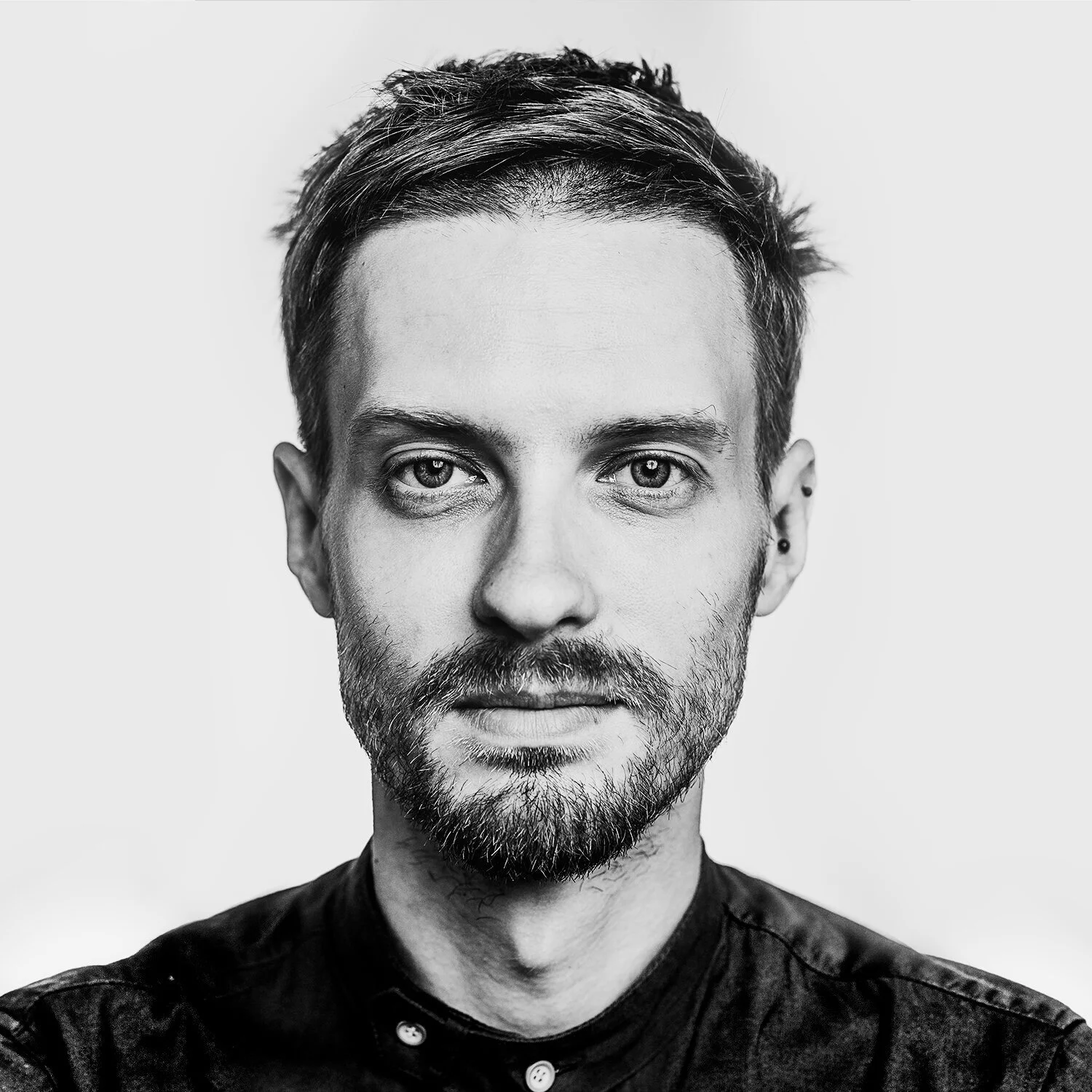
Who I Am
I'm Wojtek Kozakiewicz — a freelance video production specialist with 15+ years of experience directing, shooting, and editing documentary and commercial films. My work has screened at BANFF, Mendi Bilbao, Graz, and Poprad mountain film festivals. I've served as a jury member at international festivals — evaluating creative work against structured criteria and articulating exactly why something works or doesn't. That combination of deep technical knowledge and clear editorial reasoning is what I bring to AI training and content evaluation.
Award-winning filmmaker · Festival jury member · Remote · Available now
What I Can Evaluate
Visual Storytelling & Narrative Pacing . Lighting Design & Color Temperature . Audio-Video Synchronization . Color Grading & Color Science . Shot Composition & Cinematography . Post-Production Workflows & Delivery . Short-form Promotional Editing & Festival Trailers
Selected Work (Trailer)
Festiwal Górski im. Andrzeja Zawady Official Festival Trailer · Lądek-Zdrój, Poland
Deliverables: 85s (master) · 30s (cinema & streaming) · 15s (social media) Distributed across: cinema, streaming platform, social media
The brief: One trailer. Three lengths. 35 competing films from around the world. No original footage — only what the filmmakers had already released for public use.
Sample Evaluation (Trailer)
Topic: Creating a film festival trailer.
Question to the model: "Describe the editing workflow for a 90-second festival promo trailer compiled from trailers of 35 competing films."
Model's response (summary): Select emotionally resonant and visually striking moments from the competing films. Arrange them to build energy and anticipation. Choose music that complements the mood and cut the visuals to match the rhythm. Aim for a dynamic pace that represents the diversity of the program..
My evaluation:
Correct: The general intent is right — a festival trailer should build energy, represent the program's range, and create anticipation. These are valid goals.
Missed — 5 critical points:
Ethical framework: trailers only, never film footage. The model suggests drawing from "the competing films" — implying you can use footage from the films themselves. This is incorrect, and not just technically. Using scenes from films in competition without the directors' explicit consent violates their creative intentions and the trust between the festival and filmmakers. The correct and ethical approach is to work exclusively with materials the filmmakers have already released for promotional use: their own trailers or excerpts from the film. This constraint is invisible to the model. It will not flag it unprompted. A human editor with festival experience knows it immediately.
Music is the architecture, not the soundtrack. The model treats music as something you add after selecting footage. In professional festival trailer editing, music is chosen first — before touching a single clip. This happens in collaboration with the festival director, because the choice of music is both an artistic and a strategic decision: it defines the emotional register of the entire festival identity for that edition. Only after the music is locked do you begin working with the image. The model has the sequence of decisions entirely backwards.
Stems, not a finished mix. The model makes no mention of stems. This is a critical omission. A festival trailer typically needs to be delivered in multiple lengths — for example, 85 seconds and 30 seconds. You cannot cut a finished stereo mix from 3:20 to 85 seconds without audible edits, abrupt endings, or broken phrases. Working with stems (separated components: drums, bass, melody, vocals, atmosphere) allows you to restructure the music to the required length while maintaining its internal logic and emotional arc. Without stems, you don't have a workflow — you have a workaround.
One anchor moment, not a selection of best clips. The model recommends selecting the best moments from each film and assembling them. This produces a compilation, not a trailer. The professional approach is different: after reviewing all 35 trailers, you identify the single moment that hits hardest — emotionally, visually, or narratively. That moment becomes the anchor of the edit. Everything before it builds toward it. Everything after it resolves from it. This is a compositional method, not a curation method. The difference determines whether the result feels authored or assembled.
Storytelling over compilation — the editorial layer the model skips.
Beyond selecting strong individual moments, a festival trailer can carry a narrative thread — if the programmer has curated the selection around a theme. Women in sport. The journey instead of the destination. Survival without victory. These threads exist in the program and can be made visible through editing choices: which clips appear together, in what order, what the music does underneath them. The model will default to "select visually striking and emotionally resonant moments"
— which produces a compilation. Finding the latent story requires reading the program as a whole, understanding curatorial intent, and sometimes choosing a technically weaker shot because it carries the thread forward. This is an editorial judgment that operates above the level of individual clips. The model doesn't know it's possible. A filmmaker who has spent years working with festival programmers does.
Verdict:The model understands the goal but not the process. It describes what a festival trailer should feel like, without knowing how one is actually built. The five points above — music first, stems for restructuring, anchor-based composition, storytelling over compilation and the ethical boundary around source material — are the difference between advice that sounds reasonable and advice that works in practice. This is a consistent failure mode: surface-level correctness masking a fundamental misunderstanding of professional workflow.
Selected Work (Droga / The Way)
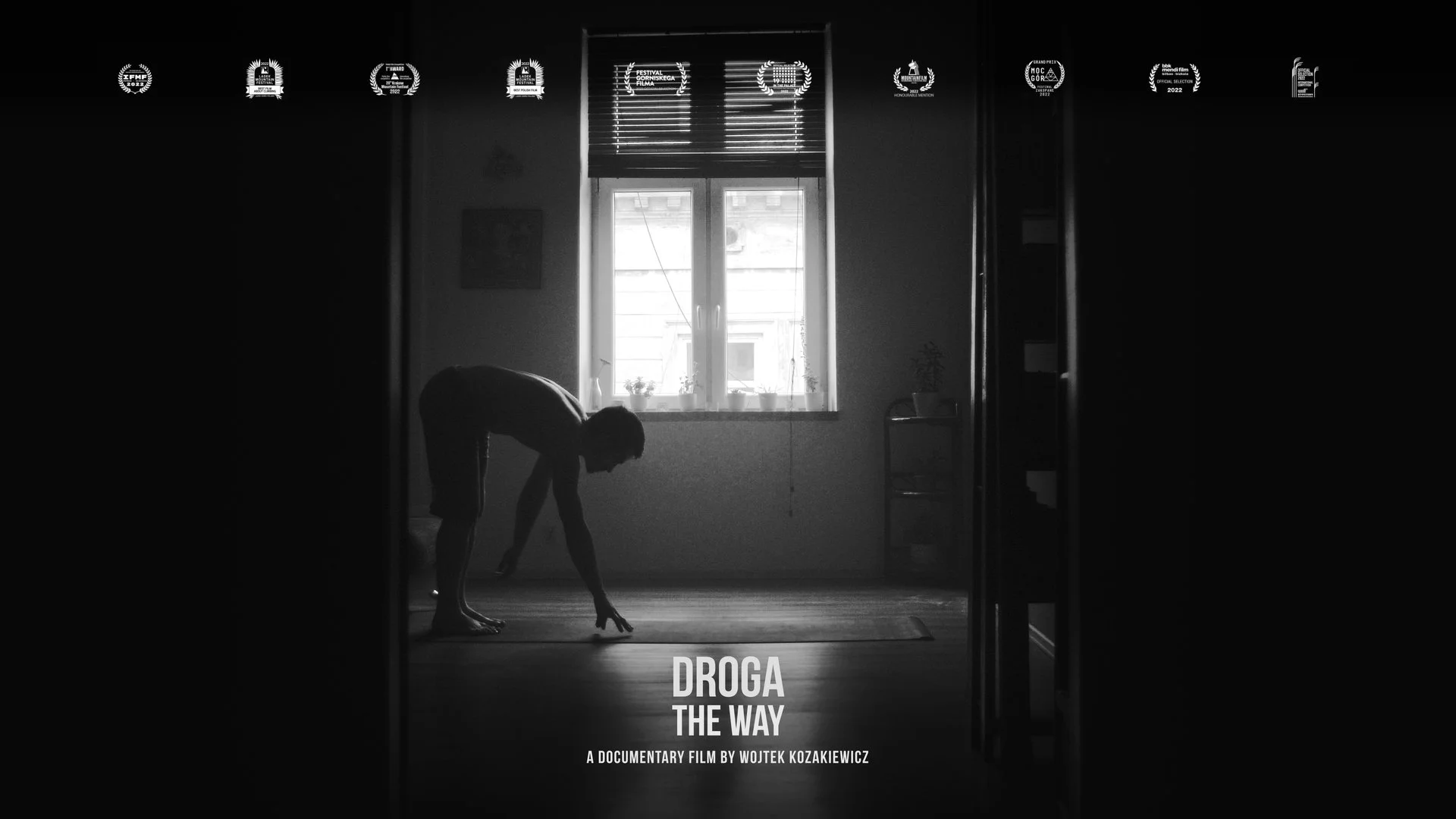
Droga / The Way Documentary · 20 min · Black & White · 2022
Awards: Grand Prix · Festiwal MOC GÓR Zakopane Best Polish Film · Festival Górski im. Andrzeja Zawady, Lądek-Zdrój (×2 awards) Best Polish Film · Krakowski Festiwal Górski Honorable Mention · Mountainfilm International Filmfestival Graz Prize for Upscale Creative Approach · International Festival of Mountain Films, Poprad 3rd Place Short Film · Festiwal Górski Adrenalinium
The film: A portrait of a Kraków climber who is also a conservator of historical monuments, a DJ, and a pianist. A man of contradictions — muscular and disciplined, yet close to tears when walking through a church his mother restored. Driven by sport, yet searching for something beyond results. The film is about a life in which the journey matters more than the destination.
Production scope: 3 years total (2 years shooting, 1 year editing). 5 cameras: Panasonic GH4, GH5 · Blackmagic Cinema Camera · Blackmagic Pocket 4K · Sony A7III. Multiple audio sources: lavalier microphone, field recorder, on-camera microphones. 2 hours long interview. Black and white or color.





Sample Evaluation (Droga / The Way)
Topic: Key decisions in long-form documentary editing
Question to the model: “What are the key editorial decisions when editing a feature-length documentary shot over two years with five different cameras and multiple audio sources, where the director is considering whether to use black-and-white, how long the film should be, and how much of the subject's interview to include?"
Model's response (summary): Consider the emotional tone when choosing between color and black-and-white. For length, follow the story — cut what doesn't serve the narrative. For interviews, identify the most informative and emotionally compelling statements and build the structure around them. Ensure visual consistency across cameras through color grading or matching.
My evaluation:
Correct: These are valid general principles. "Cut what doesn't serve the narrative" and "identify emotionally compelling statements" are not wrong. They are simply not decisions — they are descriptions of decisions. The model describes the destination without mapping the route.
Missed — 4 points where the real work happens:
Black and white is a structural decision, not an aesthetic one. The model frames the B&W choice as a question of "emotional tone" — as if it were a filter applied to a finished film. In practice, the decision to shoot or grade in black and white determines how you light, how you frame, and what visual contrasts you construct throughout production. In "Droga / The Way," the choice was made because the subject is fundamentally a person of contradictions: conservator and DJ, athlete and pianist, disciplined and emotionally fragile. Color would have softened these contrasts into a coherent surface. Black and white removes that surface and forces the viewer to read the person directly. The model would have said "black and white creates a timeless, serious mood." That is not why you make this choice.
Film length is a formal decision about density, not a result of cutting.The model says "follow the story — cut what doesn't serve the narrative." This assumes the length emerges naturally from the material. It doesn't. Length is a formal choice that precedes the cut. "Droga" was built upward from 10 minutes, not trimmed down from 40. The decision to aim for 20 minutes was a decision about the kind of film it would be: closer to poetry than prose, compression over explanation. At 40 minutes it would have become a chronicle — detailed, explanatory, linear. At 10 minutes it wouldn't have had room to breathe. 20 minutes was the space in which the film could be both spare and complete. The model has no framework for this kind of reasoning. It will tell you to cut until the story is served. It won't tell you what kind of story you're making.
Interview reduction is not about finding the best lines — it's about finding the irreducible ones. Two hours of interview. Three minutes in the final film. The model would approach this as selection: identify the most compelling statements, build structure around them. The actual process is closer to subtraction: start with silence, add only what the image cannot carry alone. What remained in "Droga" were not the most articulate or emotional moments — they were the moments without which the film's central idea (the journey matters more than the destination) would have been invisible or misread. "Good" material was removed not because it was weak, but because it pointed in a slightly different direction. This distinction — between good and necessary — is one the model cannot make, because it requires knowing what the film is about before you know what to keep. The editing was tested on viewers whose responses identified which silences held and which needed a single line to anchor them. That is an empirical process, not an editorial formula.
Multi-camera consistency is solved by constraint, not by grading. The model recommends "color grading or matching" to achieve visual consistency across five different cameras with different sensor characteristics and lenses. This is technically correct but practically incomplete. Grading can normalize exposure and color temperature. It cannot reconcile fundamentally different optical personalities — the rendering of a Blackmagic Cinema Camera and a Panasonic GH4 do not look the same after grading, and forcing them to often produces something that looks like neither. The solution used in "Droga" was upstream of post-production: cameras were not mixed within a single scene or shooting day. Each location had its own visual texture, consistent within itself. The black-and-white conversion then unified the material across sources by removing the dimension — color — where the differences were most visible. Lens differences, rather than being a problem to solve, became part of the visual language: different optical voices for different aspects of the subject's life. The model's answer treats this as a post-production problem. It is a production planning problem solved before the shoot.
Verdict: The model's response is professionally fluent and practically useless. It identifies the right categories of decision — tone, length, interview selection, visual consistency — without understanding how any of them are actually made. This is the most common failure mode in AI responses about documentary editing: correct vocabulary, missing reasoning. The gap between "cut what doesn't serve the narrative" and knowing what the narrative is, what serving it means, and what it costs to remove something good — that gap is where documentary editing actually lives. The model stands outside it.
Selected Work (Bukovina)
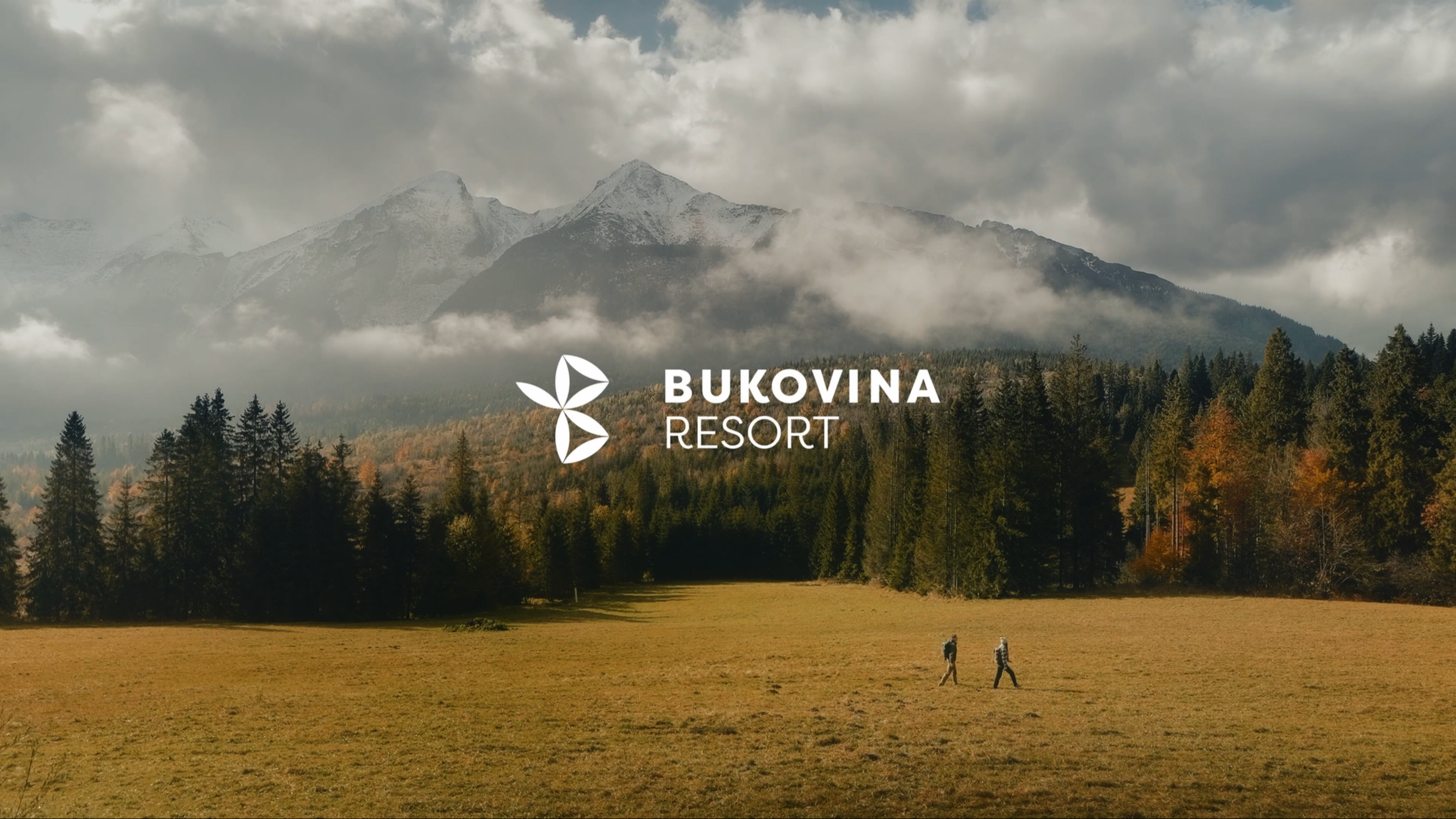
Bukovina Resort Three-Season Commercial Campaign · 2025-2026
Director of Photography · Editor · Head of Post-Production Collaborated with: dedicated colorist, sound designer
The brief: Three separate films. Three seasons. Each completely distinct — from script through photography through post-production. Not a series with a shared visual identity. Three individual films that happen to be about the same place.
Summer Built around movement — specifically, the cadence of two different cyclists. Music was composed to match that rhythm: not to set a mood, but to make the physical motion feel inevitable. Grade: high saturation, warm shadows, long golden-hour light. Sound design: natural ambience layered with composed score, no hard separation between diegetic and non-diegetic sound.
Autumn A violin motif — mountain in origin, composed years earlier, repurposed here to carry a specific tension: tradition and modernity coexisting in the same landscape. The music wasn't written for this film, but it was the right music for this film. Grade: desaturated greens, amber and ochre pulled toward warmth, mist retained in highlights rather than corrected out. Sound design: the score allowed room for natural sound — wind, footsteps, the specific silence of a mountain afternoon.
Winter A different register entirely. Not activity — recovery. The film lives in the spa, the pool, the stillness after effort. Stock music chosen for its quality of suspension: no cadence, no arrival, just continuation. Grade: cool, clean, low contrast. Blue-whites, not grey-whites. Sound design: water, breath, warmth expressed through absence of sharpness.
The through-line: The script for each film was consulted from the beginning with seasonal differentiation as a hard constraint — not a post-production decision, but a production planning one. What changes between seasons is not the color grade. It's the reason to be there.
Sample Evaluation (Bukovina)
Topic: Seasonal differentiation in commercial video production
Question to the model: "A hotel resort wants three promotional films, one for each season — summer, autumn, and winter. How should the visual treatment, music, and sound design differ between them?"
Model's response (summary): Each season has a distinct mood that should guide the visual palette: warm and bright for summer, rich oranges and browns for autumn, cool blues and whites for winter. Music should match the energy — upbeat for summer, mellow for autumn, calm for winter. Color grading should reflect the seasonal colors found in nature. Sound design can incorporate seasonal ambient sounds to reinforce the mood.
My evaluation:
Correct: The general directional instincts are right. Summer warmer, winter cooler, autumn somewhere between — these are not wrong. As a starting point for a conversation with a client, this answer is adequate.
Missed — 3 points where generic becomes professional:
1. Seasonal color is not the subject — seasonal reason to visit is. The model treats seasonal differentiation as a visual problem: change the palette, match the colors in nature. This produces three films that look different but say the same thing: "this place is beautiful in [season]."
The correct question is: why does someone come here in summer versus autumn versus winter? The answer to that question determines everything — script, music, camera movement, pacing, what you show and what you leave out.
In this campaign, summer was about movement and physical cadence. Autumn was about a specific cultural register — mountain tradition meeting contemporary life. Winter was about recovery and stillness after exertion, not about winter scenery. These are three different emotional contracts with the viewer, not three different color grades on the same contract. The model doesn't ask what changes between seasons. It asks what color to use.
2. Music is a structural decision, not a mood decision. The model recommends music that "matches the energy" of each season. This treats music as atmosphere — something that confirms what the image is already doing.
In the summer film, music was composed specifically to match the cadence of two cyclists — the rhythm of the score was determined by the rhythm of movement in the footage. Music and image were structurally locked, not tonally matched.
In the autumn film, the music was a violin motif composed years earlier — not for this film, but carrying exactly the right tension between tradition and modernity that the brief required. The decision to use pre-existing music was made because it had a specificity that commissioned music might not have achieved.
In the winter film, music was chosen for its quality of suspension — no cadence, no arrival, just continuation — because the film was about stillness after effort, not about winter as a season.
Three different relationships between music and image. The model describes one: match the mood. That's the weakest of the three.
3. Sound design is not seasonal ambient sound. The model suggests incorporating "seasonal ambient sounds to reinforce the mood" — birdsong in summer, wind in autumn, crackling fire in winter. This is the sound design equivalent of stock footage: recognizable, functional, and invisible in the worst sense.
In this campaign, sound design was developed with a dedicated sound designer for each film separately, with the score and the sound design treated as a single layer rather than two separate tracks. In the summer film, natural ambient sound was woven into the composed score — no hard line between what was recorded on location and what was added in post. In the winter film, warmth was expressed through the absence of sharp transients — not through the presence of recognizable winter sounds.
Sound design that reinforces mood is decoration. Sound design that constructs the emotional space the viewer inhabits is the difference between a competent commercial and one that makes someone book a room.
Verdict: The model's answer would satisfy a client brief at the first meeting. It would not survive contact with a production that takes seasonal differentiation seriously as a creative constraint. The gap is not technical — it's conceptual. The model thinks in categories (summer = warm, winter = cool). Professional production thinks in questions: why is this person here, what do they feel when they arrive, and what do we need to build — in script, in image, in sound — to make them feel it before they've left their chair.
Awards and honors
20+ awards and honors across international mountain and climbing film festivals in 8 countries: Poland, Czech Republic, Spain, Austria, Nepal, Canada, and Slovakia.
Award categories include Grand Prix, Best Climbing Film, Best Polish Film, Jury Award, Special Jury Mention, People's Choice Award, and Honorable Mention.
Grand Prix Festiwal MOC GÓR, Zakopane, Poland (2022)
Special Jury Mention Banff Centre Mountain Film and Book Festival, Canada (2018)
Best Climbing Film 35th International Mountain Film Festival (Mezinárodní horolezecký filmový festival), Teplice nad Metují, Czech Republic
Jury Award 10th Mendi Bilbao Film Festival, Basque Country, Spain
Special Jury Mention 15th Kathmandu International Mountain Film Festival, Nepal
Best Climbing Film 29th Maria Luisa Memorial of Photography and Video
People's Choice Award 15th Kraków Mountain Festival, Kraków, Poland
People's Choice Award XXII Lądek Mountain Festival, Lądek-Zdrój, Poland
People's Choice Award X Mountain Festival Adrenalinium, Żywiec, Poland
Best Climbing Film 15th Kraków Mountain Festival, Kraków, Poland
Best Climbing Film XXII Lądek Mountain Festival, Lądek-Zdrój, Poland
Best Polish Film 15th Kraków Mountain Festival, Kraków, Poland
Special Award 14th Spotkania z Filmem Górskim, Zakopane, Poland
Best Polish Film XXVII Festiwal Górski im. Andrzeja Zawady, Lądek-Zdrój, Poland
Best Climbing Film XXVII Festiwal Górski im. Andrzeja Zawady, Lądek-Zdrój, Poland
Best Polish Film 20th Krakowski Festiwal Górski, Kraków, Poland
Honorable Mention Mountainfilm International Filmfestival, Graz, Austria (2022)
Prize for the Upscale Creative Approach 30th International Festival of the Mountain Films, Poprad, Slovakia
3rd Place, Short Film Competition 15th Festiwal Górski Adrenalinium, Poland